


On Thursday 23 October 2025, less than a fortnight after an interim quota for the 2025/2026 Sprat Fishery came into force, large Irish pair trawlers had already landed their allocated 2,000 tonnes of Sprat and Minister for State Timmy Dooley signed a policy directive closing the Sprat Fishery.
That was just over four months ago — so what has happened in the meantime?
Government committed to meeting any legal challenge “Head On” to defend large trawler ban
In a public hearing in front of the Oireachtas Joint Committee on Fisheries and Maritime Affairs on 25 November 2025, Minister Dooley reiterated that the Department believes the robust legal framework around the current legislation excluding trawlers over 18m from inshore waters is “watertight”. He emphasised his intention to challenge any attempt to undermine the ban in the courts “head on”.
You can view the relevant excerpt of the Committee proceedings in the video below:
Large Trawler Operators take challenge to the High Court
Perhaps not surprisingly, the Minister is going to get the opportunity to put his public commitment to defend the legislation into action sooner, rather than later.
On 18 December 2025 a consortium of more than 20 large trawler operators from across the island of Ireland, initiated High Court proceedings seeking a Judicial Review against Policy Directive 1 of 2025 (the legislation enacting the ban on vessels over 18m).
At an initial hearing at the High Court on 09 February 2026, the presiding judge granted leave for Judicial Review Proceedings to go ahead. According to reports from various sources, the key areas being challenged by the vessel owners are:
- A breach of the EU-UK Trade and Cooperation Agreement: according to the applicants, the ban does not comply with post-Brexit fishing agreements between the UK and the EU.
- Lack of Scientific Investigation: the applicants are claiming the ban was introduced without sufficient scientific evidence to justify total exclusion of vessels over 18m.
- Economic/Fleet Impact: the challenge is thought to highlight the severe impact the ban will have on ALL vessels over 18m, not just those engaged in fishing for Sprat.
- Procedural Legality: the “All Ireland” nature of the challenge, bringing together vessel owners from both sides of the border, is an attempt to show the ban lacks a solid legal foundation, despite the Minister’s assertion to the contrary.
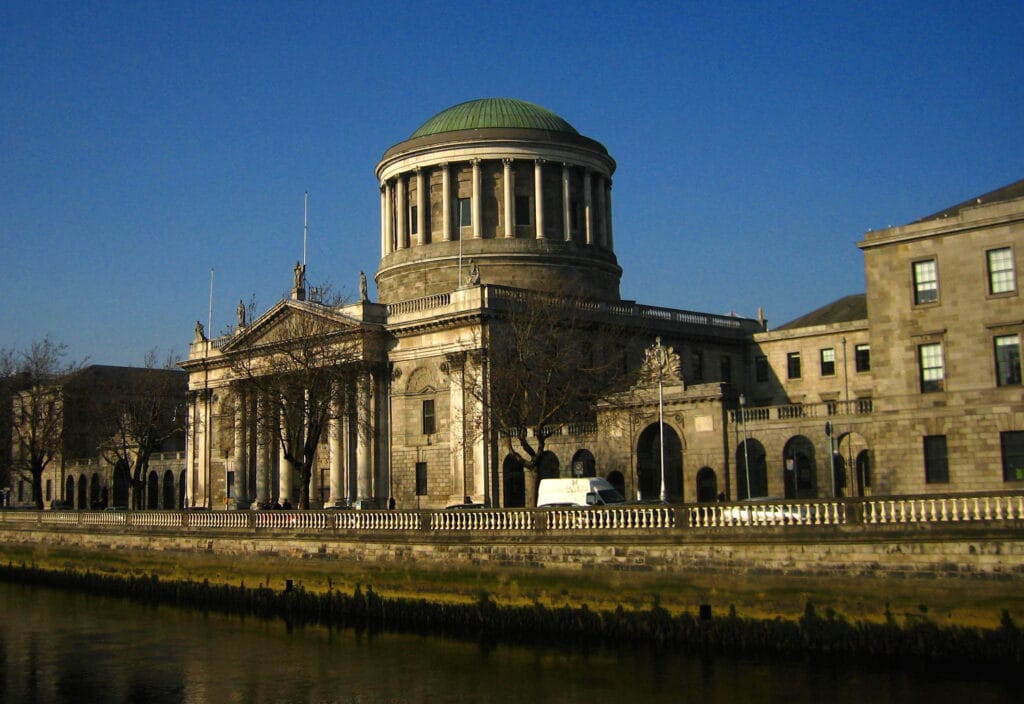
The Next Step: Status Update Hearing at the High Court
The next big milestone in the ongoing legal proceedings comes in mid-April, with a Status Update hearing scheduled at the High Court for 14 April 2026. Status Update Hearings are designed to ensure the legal challenge is proceeding correctly and set out the rules and timelines for the upcoming litigation.
Typically during this Status Update Hearing the following will occur:
- Verification of Service: The court will confirm that the legal team taking the challenge has officially served proceeding on the Minister for Agriculture, Food and the Marine.
- Case Management & Directions: The judge presiding will issue specific directions and deadlines for both parties that will typically include:
- A Timeline for Opposition: essentially setting a deadline for the Minister/Government’s legal team to file a “Statement of Opposition” and affidavits responding to those presented by the opposing legal team.
- Exchange of Evidence: agreeing dates for the exchange of further affidavits, scientific advice and other evidence relevant to the proceedings.
- Narrowing the Issues: both sides are expected to apprise the judge of the key legal and scientific issues that are in dispute to make sure the subsequent trial is focused.
- Setting a Trial Date: If the judge feels the case is ready to proceed, they will assign a date for the Substantive Hearing (the full trial). If not, they will adjourn the case for another Status Update once all relevant documents/evidence has been exchanged.
This initial Status Update hearing is the first time both legal teams are likely to appear together in front of the judge. It will give us the first indication of how vigorously the government intends to defend the ban, whether they will try to get any of the Trawler Operators’ grounds of challenge struck out early in the proceedings, and how strong the challenge really is from a legal perspective.

What does it mean for Save Our Sprat?
With the ban on larger boats operating inshore under legal threat, Sprat populations around the Irish coast remain in a precarious position. Should the ban be overturned in the courts, we would be very much back to square one.
While the Sprat Fishery for large vessels was officially closed by Minister Timmy Dooley on 23 October 2025, there were numerous reports from around the south and west coast of significant inshore pair trawling effort by large trawlers after that date. Ostensibly these trawlers maintain they were targeting other species (principally pilchard) rather than Sprat, and unofficial indications from the Sea Fisheries Protection Authority (SFPA) seemed to confirm that at the time.
Regardless of the forage fish species being targeted, the fact that large scale pair-trawling of forage fish by these over 18m vessels continued demonstrates that, should the ban be overturned, they will almost certainly return their devastatingly efficient fishing efforts to target vulnerable Sprat population come autumn/winter 2026/27 and beyond.
So we would call on ministers Martin Heydon and Timmy Dooley to back up their public commitment to defend the ban, and to bring all of their substantial government resources to bear to ensure that the challenge is thwarted. We’d also call on Ministers from other relevant departments, such as Minister for Nature, Heritage and Biodiversity, Chris O’Sullivan TD, at the Department of Housing, Local Government and Heritage, to weigh in with as much support as they can muster to defend and uphold this vital piece of legislation.
We will be watching closely as these proceedings unfold, and will be ready to ramp up our campaign accordingly as the situation develops.
Watch this space.